Common warning signs
- Repeated leaks or new stains on ceilings and attic framing.
- Missing, cracked, curling, or heavily worn shingles.
- Loose panels, backed-out fasteners, rust, or failed sealant on a metal roof.
- Deteriorated flashing around chimneys, walls, valleys, or penetrations.
- Soft or damaged decking discovered during an evaluation.
- Repairs becoming more frequent across different areas of the roof.
Repair versus replacement
A repair can make sense when damage is isolated and the surrounding roof still has useful service life. Replacement becomes more practical when wear is widespread, materials are failing in multiple areas, or repeated repairs are only delaying the same underlying problem. A clear evaluation should explain why the recommended scope fits the roof’s present condition.
What a complete replacement should address
A replacement is the opportunity to inspect the deck, correct damaged areas, install the proper underlayment, update flashing details, and build a consistent roofing system. The proposal should identify tear-off expectations, material choice, trim and flashing work, ventilation considerations, cleanup, and warranty information.
Use the project to improve the home’s exterior
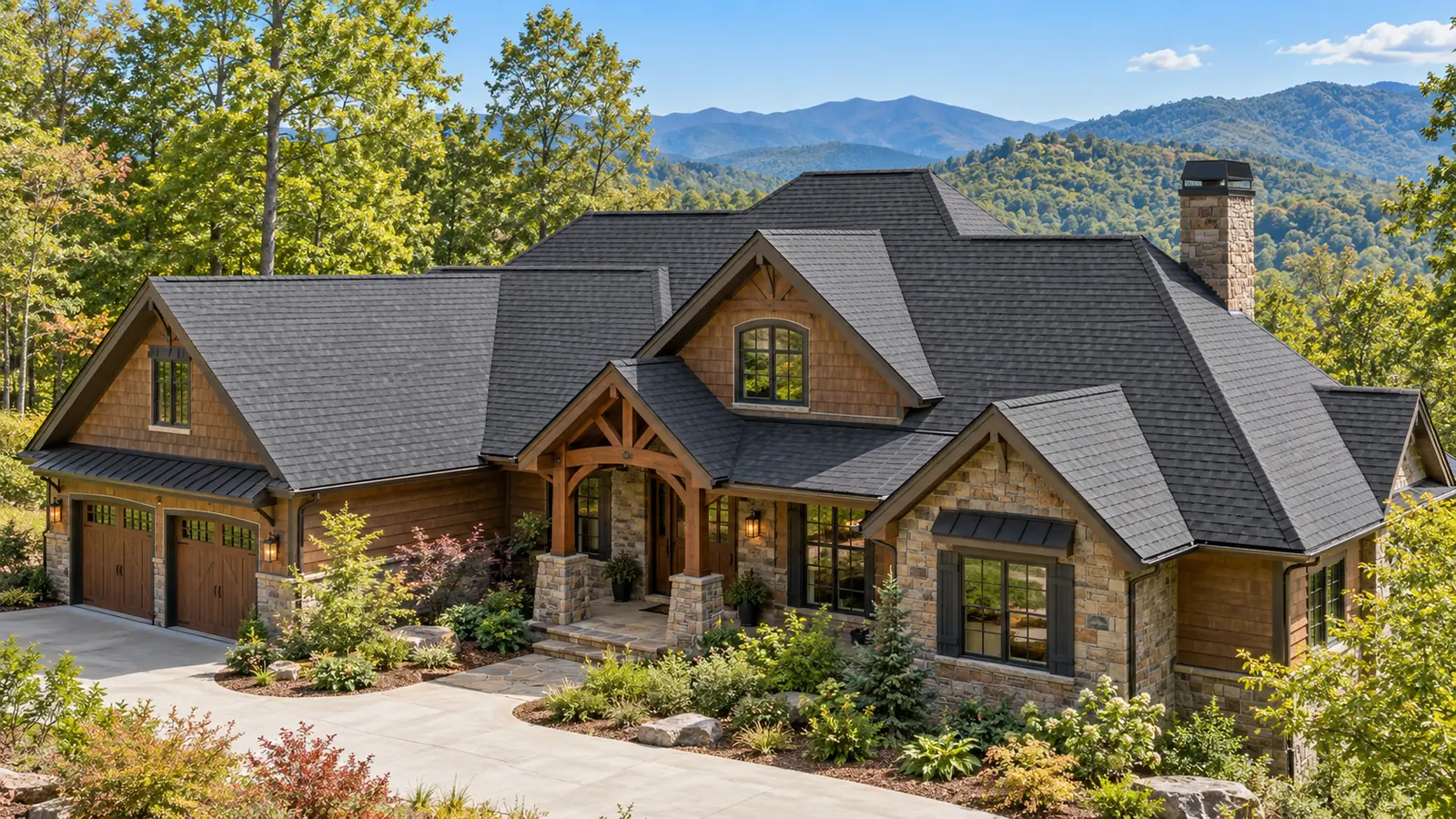
A roof covers a large part of the home’s visible exterior. Architectural shingles, 29- or 26-gauge traditional metal, and 26-gauge standing seam are available in many colors. Reviewing physical samples can help you choose a finish that works with siding, masonry, and trim.
Schedule an evaluation before the next leak
Waiting for active water entry can allow damage to extend beyond the roofing material. If the roof is aging or showing several warning signs, an evaluation gives you time to compare options and plan the work instead of making a rushed decision during a storm.
Roofing needs vary by home, roof design, existing condition, product, and local requirements. An on-site evaluation is the best way to develop an appropriate project scope.