
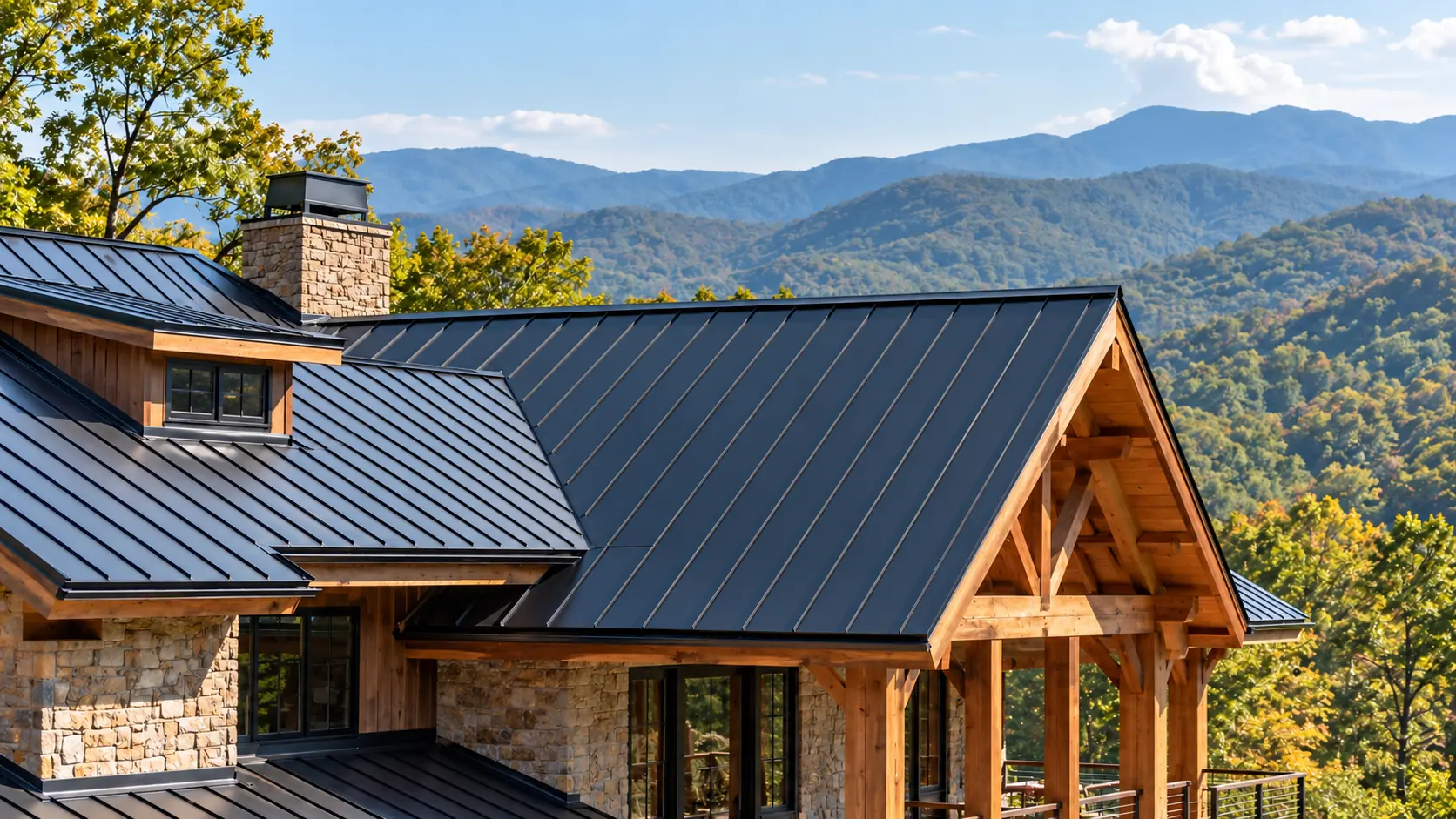
Why sliding snow can damage a home
When a large mass of snow and ice releases from a roof, the weight and force can damage gutters, downspouts, porch roofs, railings, landscaping, vehicles, decks, and mechanical equipment. It can also create a serious hazard above entrances, walkways, driveways, and gathering areas.
- Bent or torn-away gutters and fascia.
- Damage to lower roof sections or porch roofs.
- Broken shrubs, railings, vents, or exterior equipment.
- Blocked doors, steps, and emergency exits.
- Falling snow and ice hazards for people and pets.
Individual snow guards
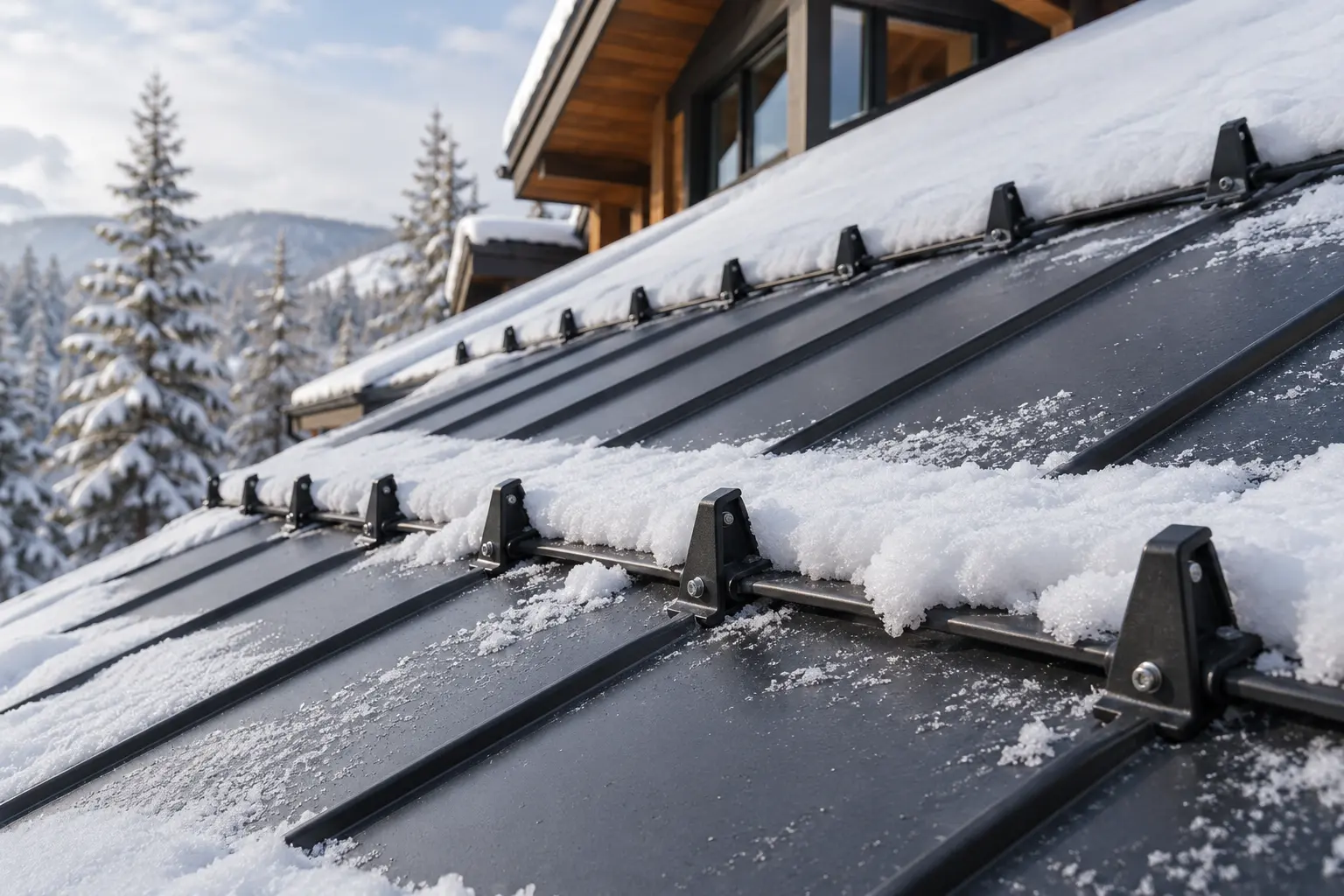
Individual or pad-style snow guards are installed in a planned pattern across the roof surface. Rather than acting as one continuous barrier, they help break up and distribute the moving snow load. Their layout should be based on the roof and the product requirements—not placed as a single decorative row at the eave.
Attachment methods vary by roofing system. Some products clamp to standing seams, while others are mechanically attached or adhered only where the manufacturer and roof assembly allow.
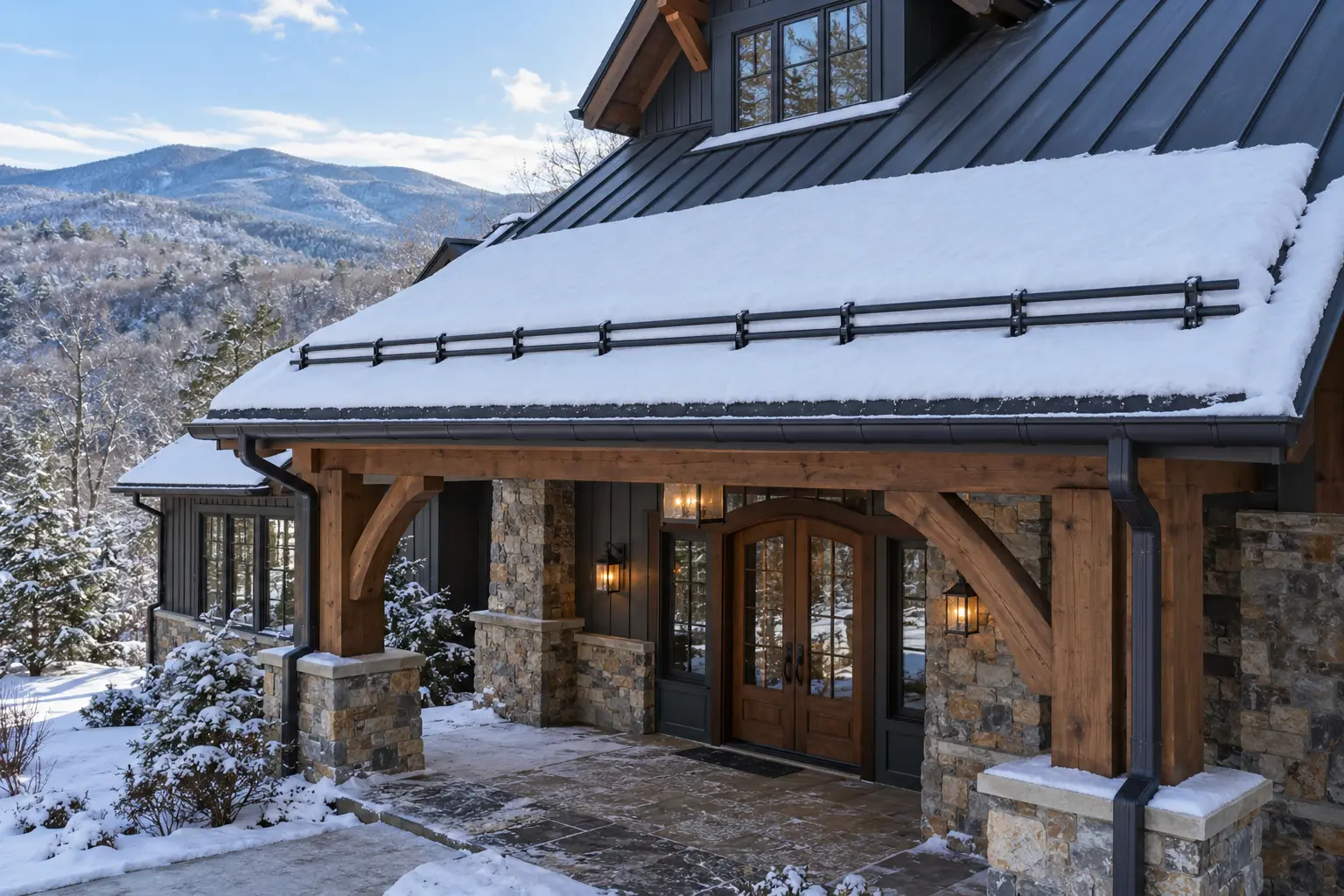
Continuous rails, bars, and snow fences
Continuous snow-retention systems create a horizontal barrier across the roof. They may use one or more bars, rails, or pipe-style members supported by brackets. These systems are often selected for longer roof slopes, higher snow loads, or locations where a more substantial retention system is needed.
On standing seam metal roofs, many systems use engineered clamps that attach to the seams without penetrating the panel. Exposed-fastener metal, shingles, and other roof types require products and attachment details specifically approved for that assembly.
System placement and attachment matter
Snow retention should be treated as a designed roof component. Roof pitch, eave-to-ridge length, panel type, structural attachment, roof geometry, valleys, drifting, and expected snow load all affect the number of rows and the spacing of guards or brackets. Concentrating the full load into an undersized system can damage the retention hardware or the roof itself.
- Use a product compatible with the exact roofing system.
- Follow the manufacturer’s layout and attachment requirements.
- Confirm that the structure and roof assembly can carry the retained load.
- Plan protection above entrances, decks, lower roofs, walkways, and equipment.
- Include valleys and intersecting roof areas in the evaluation.
Snow retention does not prevent ice dams
Snow guards control sliding snow; they do not correct ice dams. Ice dams typically develop when heat escaping from the home melts snow higher on the roof and the water refreezes near a colder eave. Water can then back up beneath roofing materials.
Reducing ice-dam risk may involve attic air sealing, appropriate insulation, balanced ventilation where the roof design uses it, correct eave and flashing details, and ice-and-water protection installed as part of the roofing system. Existing homes should be evaluated before choosing a solution.
Where roof heating cables may fit
Listed roof-heating cable systems may be used in limited areas to help maintain drainage paths at eaves, valleys, or gutters. They are not a substitute for correcting insulation, ventilation, drainage, or roofing problems, and they do not replace a snow-retention system. Any electrical system should be selected and installed according to its listing and applicable electrical requirements.
Plan winter protection with the roof—not after it
The best time to plan snow retention is during roof design or replacement, when the panel profile, attachment points, trim, structure, and areas below can be reviewed together. Systems can sometimes be added later, but the existing roof should be inspected first.
Lopez Roofing can evaluate the roof type and the areas that need protection, then discuss compatible snow-retention and ice-control options for High Country homes. Product selection and final layout should follow the applicable manufacturer and project requirements.
Roofing needs vary by home, roof design, existing condition, product, and local requirements. An on-site evaluation is the best way to develop an appropriate project scope.