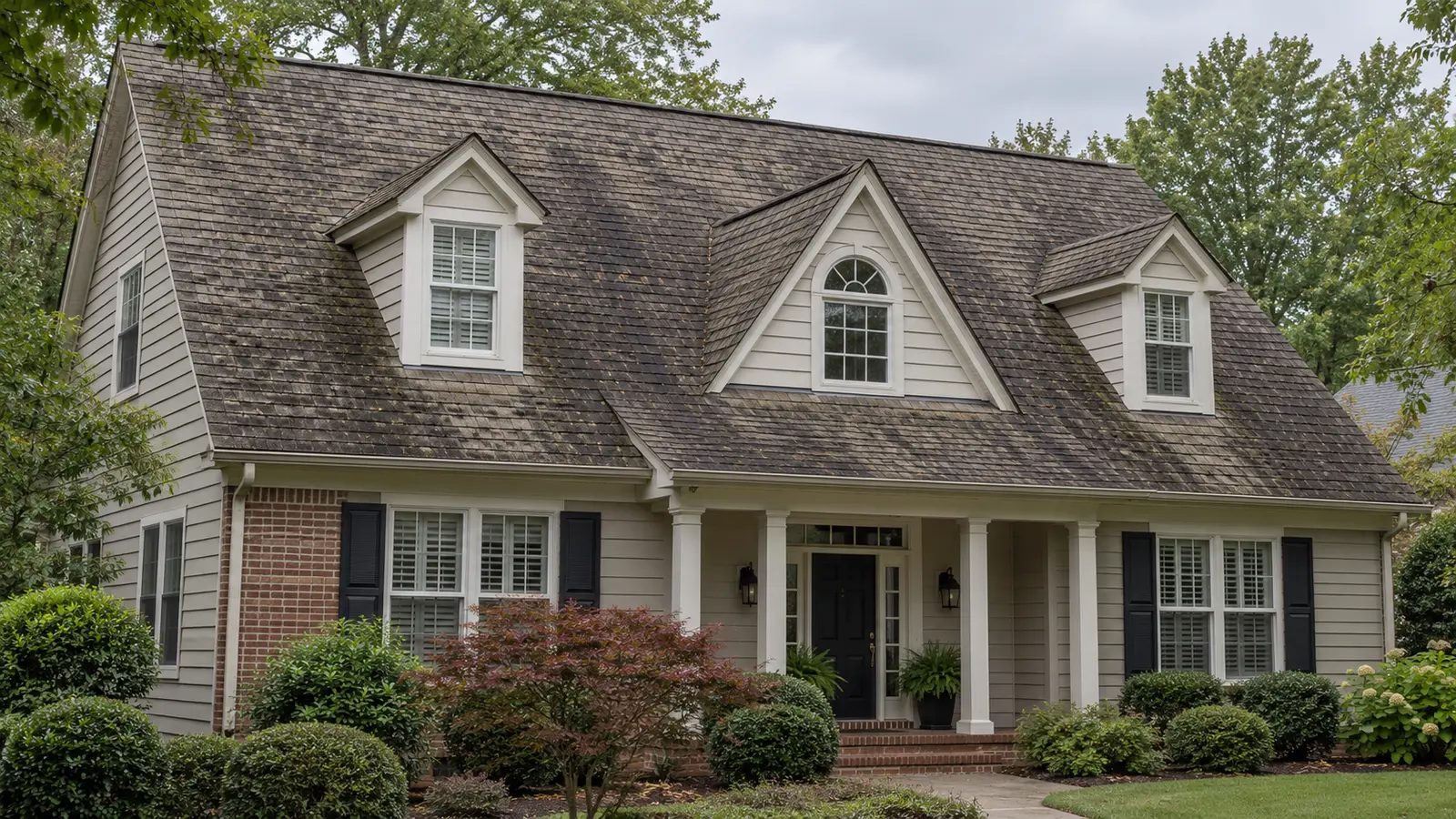
Overhanging branches can cause direct roof damage
Branches that touch or move across the roof can rub away protective granules, scratch the shingle surface, and place repeated stress on edges and flashing. Larger limbs can puncture shingles or damage the roof deck when they fall during wind, snow, or storms.
- Repeated rubbing can wear the surface of nearby shingles.
- Falling limbs can crack, puncture, or dislodge roofing materials.
- Branches can give squirrels and other animals easier access to the roof.
- Heavy shade slows drying after rain and encourages organic growth.
Leaves and pine debris hold moisture where it should drain
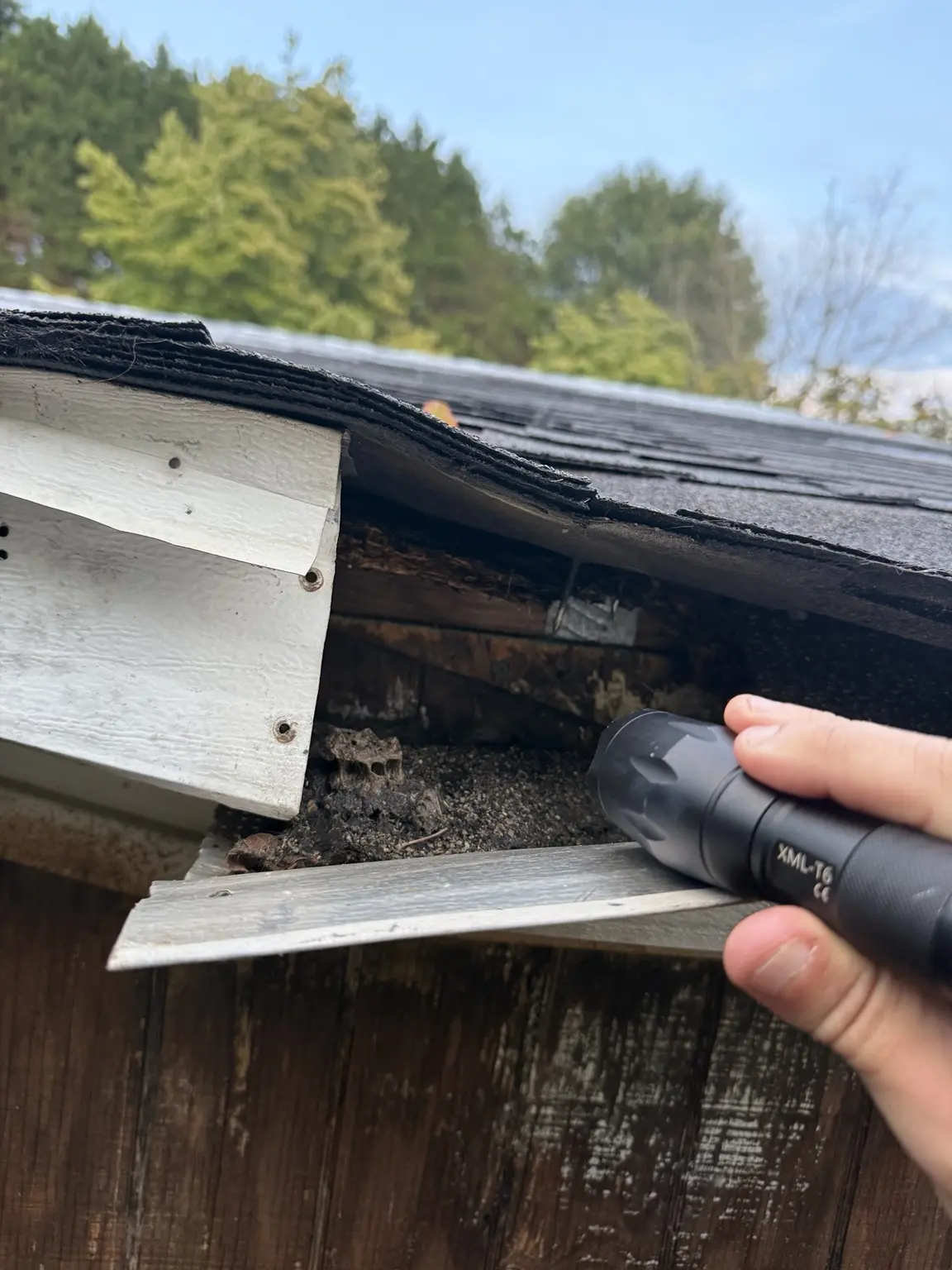
Leaves, needles, seed pods, and small twigs often collect in valleys, behind chimneys, along roof-to-wall areas, and inside gutters. These piles can stay wet long after the rest of the roof dries. They may also slow drainage and send water toward flashing details or beneath loose shingle edges.
Clogged gutters can overflow against the fascia and roof edge. In colder mountain conditions, wet debris and poor drainage can also add to freeze-and-thaw stress.
Algae stains are different from moss and lichen
The dark streaks commonly seen on asphalt shingles are often caused by blue-green algae. Algae staining does not automatically mean the roof is leaking or structurally damaged, and it may begin as an appearance issue. However, widespread staining can hide the true condition of an aging roof and usually points to a surface that stays damp for extended periods.
Moss and lichen create a thicker growth. They can hold moisture against the shingles, attach to the granulated surface, and lift shingle edges as growth expands. Aggressive removal can tear the surface or remove protective granules, which is why the growth should be evaluated before cleaning.
Do not pressure-wash asphalt shingles
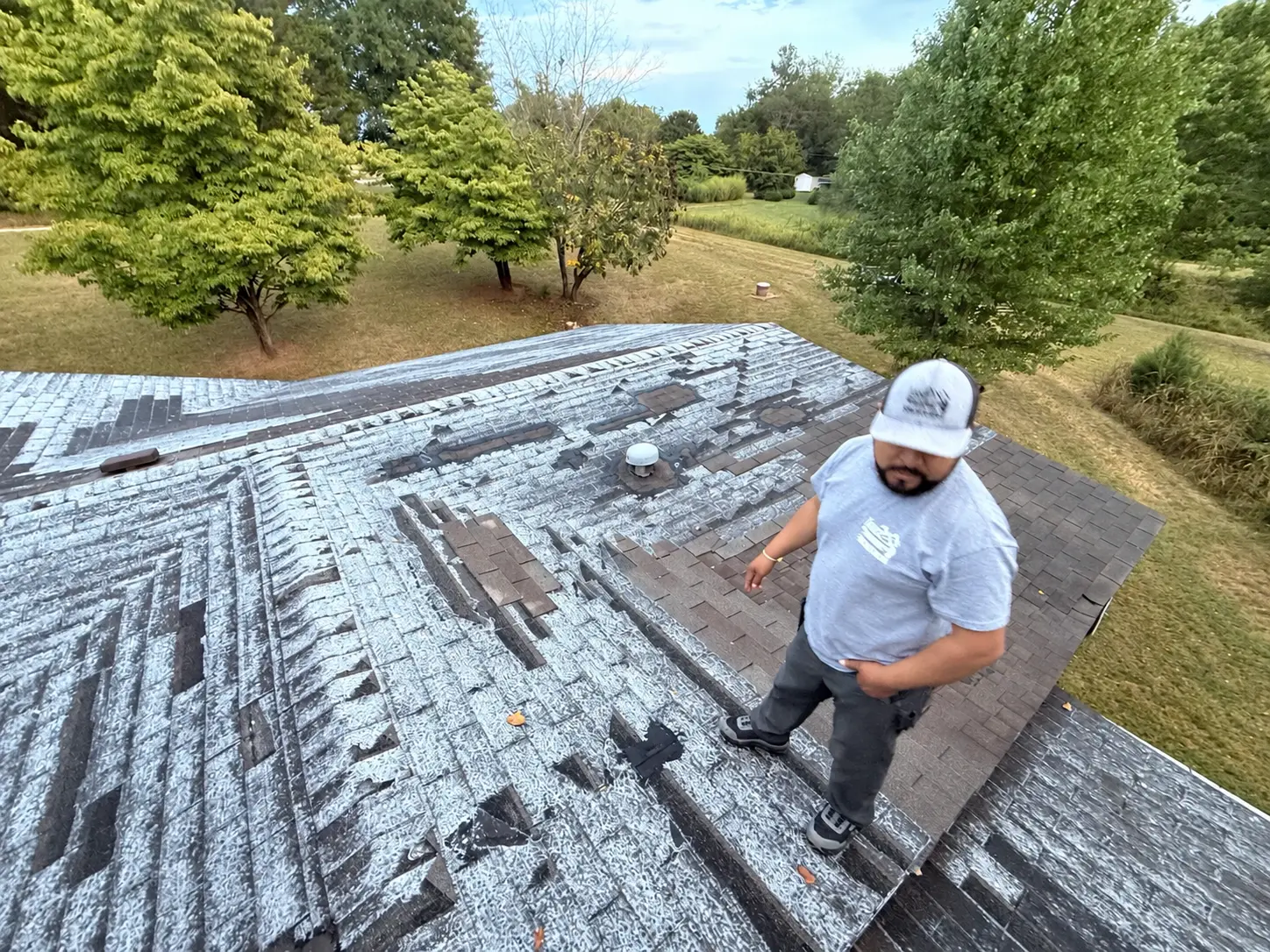
High-pressure washing can strip protective granules, force water beneath shingles, and shorten the useful life of the roof. Scraping or pulling moss by hand can also damage the surface. Cleaning should follow the shingle manufacturer’s instructions and use a roof-safe method appropriate for the roof’s age, pitch, and condition.
- Avoid walking on a steep, wet, or growth-covered roof.
- Do not aim a pressure washer at asphalt shingles.
- Do not use an unapproved chemical mixture that could damage roofing, metal, plants, or runoff areas.
- Have a professional inspect heavily weathered shingles before paying for cleaning.
Reduce the conditions that allow growth to return
Cleaning alone may not solve the cause. Keeping gutters clear, removing debris from drainage paths, and having qualified tree professionals trim unsafe or roof-contacting branches can improve airflow and allow the roof to dry more consistently. Homeowners should not attempt to remove large branches above a roof without the proper equipment and experience.
When to schedule a roof evaluation
Request an evaluation if branches are touching the roof, valleys stay packed with debris, moss is lifting shingle edges, gutters repeatedly overflow, or you see missing granules, cracked shingles, stains inside the home, or soft roof decking. Lopez Roofing can assess the condition and explain whether maintenance, a focused repair, or replacement is the practical next step.
Roofing needs vary by home, roof design, existing condition, product, and local requirements. An on-site evaluation is the best way to develop an appropriate project scope.