Start with safety, not a ladder
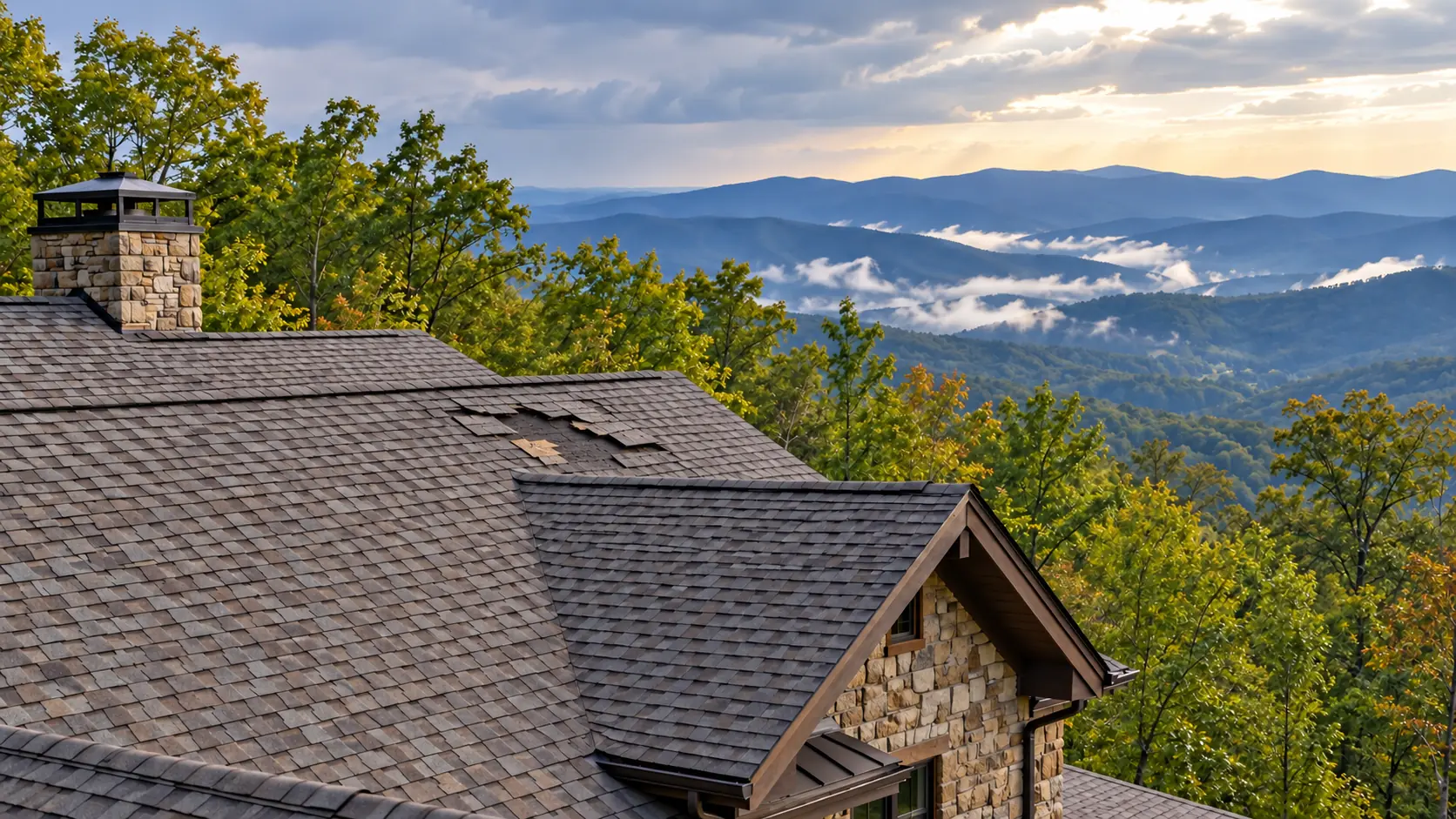
Do not climb onto a wet, steep, or visibly damaged roof. Look from the ground for missing shingles, lifted metal panels, damaged ridge caps, displaced flashing, tree debris, or material in the yard. Inside the home, check ceilings and attic areas for stains, damp insulation, or active dripping.
- Move belongings away from an active interior leak.
- Photograph visible damage from a safe location.
- Record the date and approximate time of the storm.
- Call a roofing professional if you see damage or suspect a leak.
Have the full roofing system evaluated
Storm damage is not always limited to the most visible spot. A roof evaluation should consider shingles or panels, ridge material, flashing, pipe boots, valleys, penetrations, and areas where wind can lift an edge. The goal is to understand whether a focused repair is appropriate or whether damage is spread across the roof.
Document the condition before permanent work begins
Clear photos, measurements, and a written roofing scope help homeowners understand the recommended work. If an insurance claim is involved, this information can also help the carrier evaluate the loss. Your insurance company—not the roofer—determines whether damage is covered and what the policy will pay.
Avoid signing under pressure
A strong roofing proposal should explain the work, materials, warranty information, and price. Ask questions before authorizing repairs. Be cautious of anyone who promises a specific insurance outcome or asks you to sign an incomplete agreement.
How Lopez Roofing supports the process
Lopez Roofing can inspect visible roof conditions, prepare photos and measurements, develop a repair or replacement scope, and coordinate roofing details with the insurance carrier. We provide roofing expertise and project documentation; we do not act as a public adjuster.
Roofing needs vary by home, roof design, existing condition, product, and local requirements. An on-site evaluation is the best way to develop an appropriate project scope.